Wednesday, August 28, 2013

The First President of the Moon ~ D.M.J. March

The First President of the Moon ~ D.M.J. March
--------------------------------------------------------------------------------
"Therefore no one will be declared righteous in God's sight by the works of the law; rather, through the law we become conscious of our sin." ~ Romans 3:20

There are already a few companies here on Earth that will sell you a slice of the
big ol' pie in the sky (some have even been talked about on MyMOON before :P),
however readers would be keen to note the legal framework of celestial ownership
seems to be coming under some review lately with the establishment of the first
protected lunar sites on behalf of the USA and its Apollo missions.

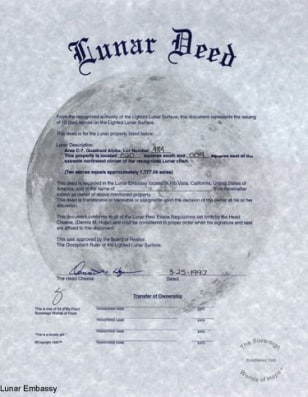
Lunar Deed for land from Lunar Embassy (SAMPLE ONLY)
While I certainly respect the sentiment of protecting these sacred sites for all time, we should be sure to address the fundamental shift in the spirit of verbiage and the dangerous potential for over-collusion between military agenda and this decidedly civilian agency that has been the forefront of American (and most human) ventures beyond Earth since its inception.

"Ike" talking with the troops near the end of WW2
When NASA was formed by Eisenhower it wasn't some lovey-dovey pre-60s peacenik orientation that convinced the old General to appoint civil agents to the lead positions in his
new aerospace agency. This agency was about to become the focal point for the entire US sphere of human influence above a few dozen feet off the ground. This visonary orientation of the agency towards peaceful exploration in the interests of all the citizens of the
Earth was nearly foisted over-top of all existing space and military infrastructure of the time. 
   The Army, Navy and Air Force all had elements of rocketry and advanced flight development
under-way (to say nothing of the Navy's predisposition for the development of simulated
and self contained environments including communications, power and life support systems
designed for long voyages in extreme-stress environments).

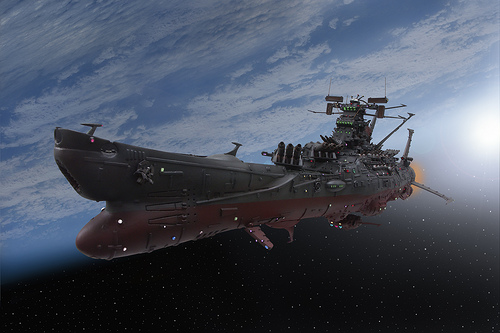
The Yomato, a fictional space-navy ship
It was a serious and intentional executive mandate to make NASA civil and it really went against the fledgling grain of the time. After this slight against the other generals and the prevailing winds of congress one could even argue that Eisenhower’s hold over the upper-echelons truly began to wane. Regardless, this decision paved the way for an open and civilly motivated NASA under Kennedy to really press the boundaries of human potential in a way that didn't require those people at the core to be starved or fundamentally deprived of any bountiful American or human rights. Both Nazi and Russian (the only comparison at the time) astrospace programs, at least partially, relied on extreme abuse of workers and secrecy of the works being performed.
Prisoners/Workers of the Nazi Rocket program
It is unlikely that even a militarized American space program would have resorted to, say, a militarized convict labour force (though, thankfully, there is no way to know for sure), but the lesson should not be forgotten that these starkly contrasting systems of space management have existed in our brief history of flirtation with these new technologies and ideas. It is, in fact, the cruelties of these other systems that seem to inexorably linked to the collapse of not only their patron nations, but essentially the entire ideology that supported them.
    The American example is the only space program that really survived the Cold War in-tact. While Russia is now a more than capable space partner, and was previously a leader in the field, their Buran shuttle never materialized and they are still mostly utilizing technology from 50 years ago. Moreover, all of their efforts to make lasting contact with Mars, the Moon or any other celestial body have largely fizzled out. The brilliant pace of innovation was broken for the very fact that their program failed to produce workable solutions for many related problems that space-faring entities must embrace. Social, economic, moral and military elements must all coalesce in a way that seems both requisite and unique for groups that wish to sustain an exo-planetary lifestyle. The Soviets didn't just not do it quickly enough, even today they have never sent a person to the moon as the American civil NASA did back in 1969.

Copy of the plaque placed on the Moon in 1969 "in peace for all mankind"
Surely in this day and age it is apparent that the reason cannot be technological. If the Americans truly went to the moon in '69, how could the Russians not at least match that feat in the following four(plus) decades? The reason, I believe, is largely a tendency towards militarism and a lack of cooperative effort between nations. A national military is by its definition a Xenophobic sort of entity. Modern civilized armed forces are primarily concerned with events abroad and it is an extreme measure in modern society for any military operations to be deployed against domestic citizens. 
    Even where alliances between nations exist, thus far, they are not concrete and binding above the natural duty a military has to its own people. I have made this statement in the present tense, but indeed a transition that is underway around “space laws” seems very apparent and it is a part of a wider alteration of those sorts of liberties that were won at great cost and endured after the major conflicts of the 20th century. With the assertion of US protected lunar zones, and other individuals selling real estate, the question beckons; through what (moral) authority are these extraterrestrial enterprises being undertaken and enforced ?

A small sampling of Asian military power
It seems quite obvious that for there to be any sensibility to the new laws and proclamations protecting these regions, the threat of punitive measure is implied. Don't mess with the USA lunar sites, or else ! But again, this begs the question; or else what ?
   There seem to be two schools of thoughts on the matter. One, fiscal penalties or trade related measures directly from the USA or perhaps enacted through the WTO, etc. The second school is militaristic in orientation; an intrusion into the outlined areas would be the same as a sanctioned government occupation of, for example, American sovereign territory. This second school derives all its substance from the supposition that national boundaries (of many sorts) will continue to exist into the future and will continue to be a tremendous threat and barrier to a truly unified and coordinated Earthly space organization. While either sort of retaliation may seem justified to some, there is a larger issue here...

Magazine article about the new lunar protected zones.
Illustrates well the juvenile and bigoted attitudes lending themselves to this effort.
   In some cities around the world public gardens and displays are delicate, intricate and well respected. In other cities every public edifice is constructed with the same durability and use requirements as a prison. The difference is one of seemingly inverted societal norms and respect for government. While it may seem contrary, it is often the case that more 'free' societies treat their public areas like a prison yard while less 'democratic' nations enjoy splendid looking public transit, parks and safety by comparison. 

   The point here is only this; who exactly is threatening to disturb those sites ? Who WOULD disturb those sites? Is the threat of intentional harm done against these American achievements more pressing now than during the cold war (therefore these new laws are required in this modern age)? How is there any assumption that if China, for example, sends people to the moon there is a legitimate concern that their astronauts may maliciously walk over and start messing about with the USA's 1960's era space-craft sites? Or India, perhaps ? What nation would be so disrespectful and so desire the ire of the rest of the planet as to perpetrate such a horrendous property crime without precedent ? And so we see that these laws are in no way designed for their assumed purpose of honouring the moon-sites, in fact, those boundaries were already inscribed in the hearts of anyone who looks out into the deep of night above... only the most dastardly of individuals (scaled up to a space-faring entity, mind you) would either be capable or interested in such a wanton act of desecration.

Dr. Strangelove would probably vandalize the Apollo areas...
...but then, what nation does he represent ? 
I propose that these new laws do not validate the sanctity of these sites, but much rather they taint the very ideology that established those sites. Laws concieved and applied to space under these new bulla are built solely upon notions of projected national isolationism and protectionism, of future territorial rivalry in space, and mostly of a failure among nations to form a peaceful and lasting global government tending to the increased well being of all people.        
   Moreover as opposed to being founding in a spirit of peace for all mankind, these laws are an assertion of disunity, a threat and a warning against our own... It is a complete change in the framework, ideas and associated institutions affecting our closest celestial neighbour – and it should not be taken lightly.


*(LUNAR EMBASSY, BUY MOON LAND, ETC).


Wednesday, January 9, 2013

The Real Reason for The Season


A short preamble;
------------------------
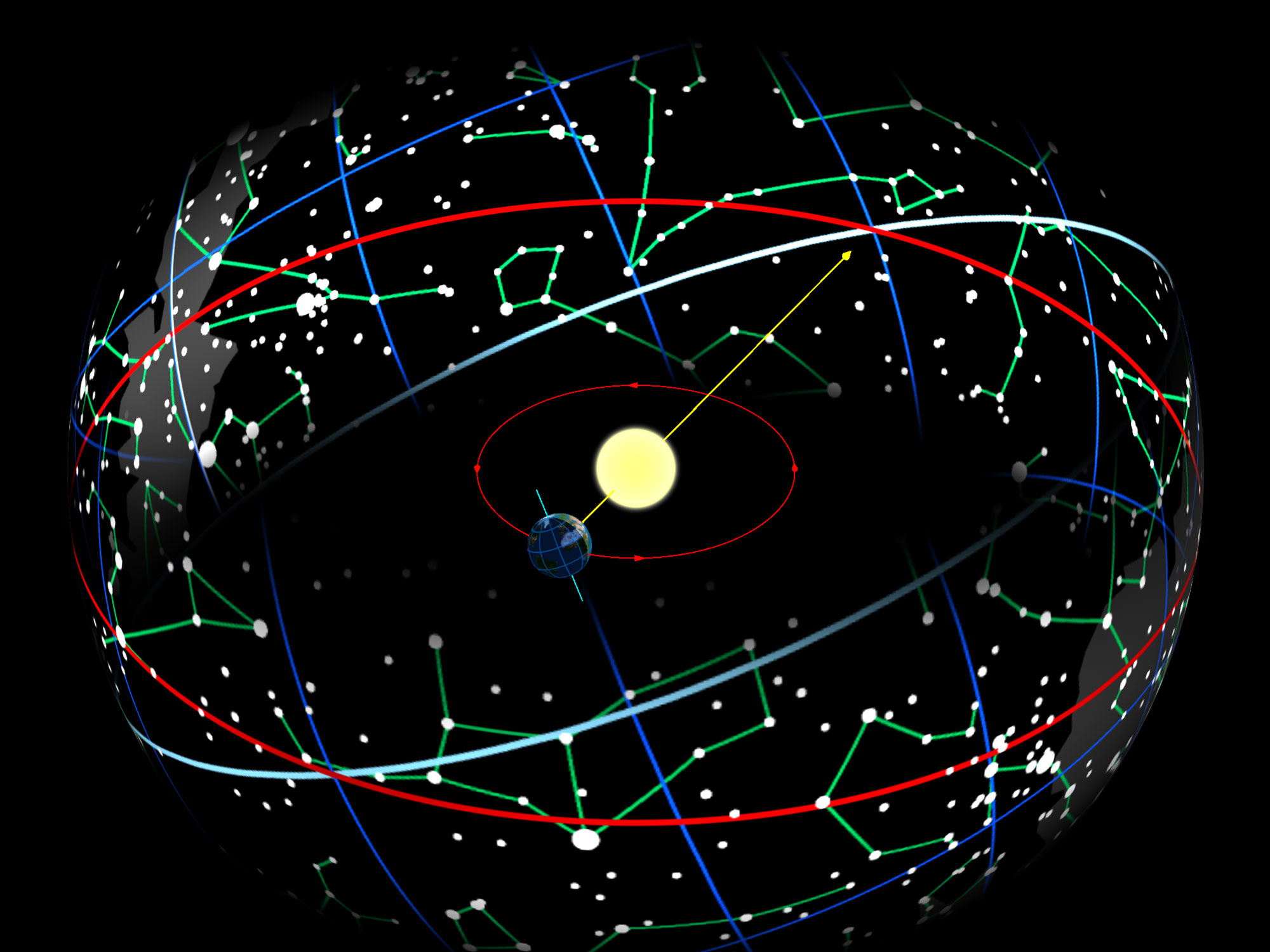
A complete revolution of the planet happens every day, the moon does a cycle in a month. Although we recognize these events we dont celebrate them or revere them. Every 365 the same thing happens again, but we do... why is that ? How is a circuit around the sun any different, really ?

My answer; people are scared of the dark ;)

--
Do you know how far you've travelled through the cosmos on "Spaceship Earth" over a year (even discounting the daily 20,000+ miles for basic planetary rotation ?) This should get you started;

http://en.wikipedia.org/wiki/Earth's_orbit

------------------------
i.


Now that all of the general brew-ha-ha about the holidays is dying down I thought we might take a few minutes and really consider what that was all about. See, I believe in Santa and Jesus as much as the next guy but what I find most interesting about the whole 'festive season' is that when one researches it one finds that the custom is not inherent to any one religion but rather many around the globe celebrate this time of year and it has also traditionally demarked the 'end of the year' (ergo the beginning of the next) as well.


So what, you might wonder, is this 'reason for the season' I speak of ? It is related to the position of astrological bodies far more than anything else. The winter solstice is primary among these events. It is the shortest day of the year because of the position of the planet and this has long been understood. It has also long been exploited by peasantry and elitists for different ends as well. I wont go into too much of that here, but I just wanted to make the point about there being more to the story than just the 'myths'. I intend absolutely no offence to any religion and nothing I've said would really take away from the fact that, say, Jesus could have been born on day X or whatever. My only point here is that the celebrations and the events have been going on for a long long time before and after these individuals or situations that are celebrated on these days.

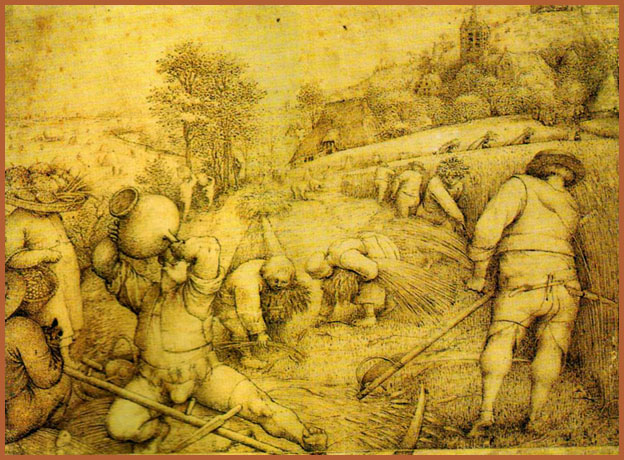
Even more to the point, New Years Day is not in any way promoted as a celestial event although it would certainly help overall understanding of our place in our own solar system if it were. Very little is said to make any sense of the holidays we experience or their relavence in the modern world. Summers off of school is a similar phenomena. It makes no sense. Originally it was harvest time so childrens parents would KEEP them home rather then send them to school, so the schools figured out it was smarter to simply shut down. But when is the last time any of us worked harvest in summer as a necessity of manpower on the family farm ? It would be ludicrous to give children time off now, if they had always been going throughout the year and someone made a motion to let people off for 3 months the outcry would be insurmountable, yet we cling to this tradition.


I have digressed a little, but I wanted to take a part of this to establish some precedence before the next section, because aside from festivus and new years this year we also paid our dues to the 'mayan apocalypse' !! Again, this was primarily a celestial event, but it became a call to buy provisions and celebrate being alive ... celebrating that nothing happened... of course we didn't really do that, but we did everything else. Millions in media dollars and emergency resources was doled out over another celestial event that most people had very very little comprehension about. Yes, we are entering the age of aquarius finally or something, but really even these zodiac things seem a little worn to me, but nevertheless there it is.

Now here's the wild bit; since we see that these times are usually a catalyst for one group to disobey all regularly imposed structure (taking off work, being silly, talking about myths as a basis for living) ... and another group does everything in its power to exploit any such sentiment (buy buy buy, its CHRISTMAS, CHRISTMAS SALE, LAST DAY BEFORE CHRISTMAS TO BUY, etc etc) and since these are so strongly based on celestial events that were presented improperly... what kind of season can we expect over the next year when several close and possibly highly visible phenomena occour ? Without proper education and information I shudder to think. Especially since by definition any celestial event which is not part of the regular happenings of the cosmos is a deviant force in the heavens, so to speak.


Will we wise up? Will we make new myths? Will we break down ? Will we be afraid ? Will we start to pay more attention to our ideas and our real position in space and time ? Phil Plaits work, seems to speak to some of this and I must laud him on his efforts to educate people on the dangers of asteroids and our ability to potentially overcome them (to say nothing of Paul Allen and Planetary Resources who actually would like to snare one of the buggers!!).  It is a worthy area of consideration that can only lead us forward in my opinion. But I think we are all missing the mark by neglecting to better consider the societal impact of, even,  a strongly visible near miss. Even if there is no real danger it is an exciting opportunity to exploit the situation for a great increase in peoples awareness of solar mechanics in general if it is done correctly. Without such efforts I do worry home some people might react in their ignorance.

 If news people can spend so much time on a mayan misinterpretation, they should also be interested in marketing a meteor fly-by to the people as well. Instead of just causing a bunch of unhelpful and unfounded worry they might actually do some good by expanding peoples awareness and getting them off the myths. We have facts and a global information system now, after all.


Again I'm not trying to take A THING away from anyones religions. Quite the contrary; I'm trying to show how these traditions take away from simple understanding of celestial events. In fact, if you simply wiki WINTER SOLSTICE you can see for yourself how many religions have observances on that day. Also if anything of Christianity or any religion exists in these celebrations - exploiting them one day a year for personal gain is probably not what the originators of such traditions had in mind. Celebrating Christmas makes one no more a Christian than standing in a garage makes one a car. At least if we can accept that we might start looking beyond the interpretations and more to the science of the matter.

Nevertheless I did enjoy my turkey dinner and spending time with family. Perhaps if these times weren't so poignant and ingraned we would do that a little more often, there is, after all the exuinox... oh wait, isn't that easter. I'm still not sure what the bunny and the chocolate nuggets is all about :P


Monday, November 19, 2012

Augmented Infinity


~[Cerebral Graffiti]~


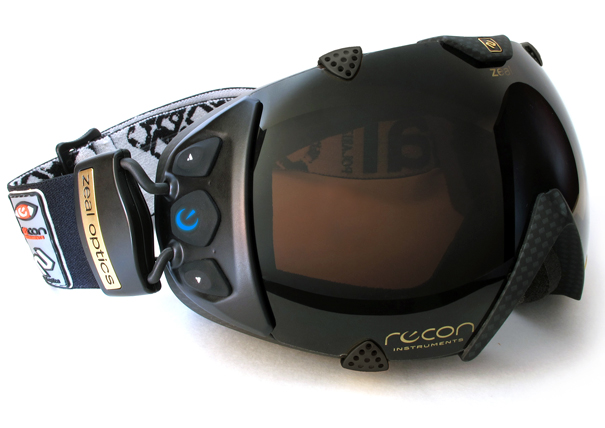
Augmented Reality(AR~ http://en.wikipedia.org/wiki/Augmented_reality ) is closer and closer upon the horizon. Products like GoogleGlass ( http://en.wikipedia.org/wiki/Project_Glass ), Recon Instruments ( http://en.wikipedia.org/wiki/Recon_Instruments ) and others are beginning to show us what our future could look like (or at the very least how we will see it). I have joined a few groups about AR tech and applications in the past year and I am very hopeful about the proliferation of this technology in the next decade (no I am not a stock advisor) and the fantastic development rush for apps that will be unlike anything previous in hour history. These technologies and apps can be designed to specifically enhance or guide human performance in a way previously unimaginable.

The next generation of space suits also incorporates this technology ( http://www.popsci.com/technology/article/2011-06/nasas-next-gen-spacesuit-could-have-helmet-display ) and I am hopeful of a time where these digital overlays are pretty common for nearly every vocation. What we are really talking about is the introduction of Heads Up Display technology of the purest and most integrated variety. A cybernetic hybridization of the head senses and technology coming together at last. For many years research has been done on the utilization of voice commands and eye reactions on computer interfaces ( http://empowerednews.net/blink-eye-tracking-technology-for-computer-control-from-cms-llc-inspired-by-paralyzed-father/1825143/ ). Through further natural use as time goes on, jargon and enhancements in performance based on user feedback will result in a totally intuitive and utilitarian computer interface.


Please also take a look at the series H+ on youtube ( http://www.youtube.com/watch?v=ZedLgAF9aEg ). It is a show about bio-genetically integrated (trans-human) AU and the first episode is only a few minutes long after a minute or two you will see the sort of tech possible.

There is also an ad on youtube for a fictitious aerosol based playstation9  http://www.youtube.com/watch?v=wPFoh75sbSU you might still be able to find. That says nothing of movies like total recall or the matrix that take the argument to an existential level. But mostly I am interested to hear thoughts on this new wave of high-tech instruments and what you think, if anything, they will mean for the future of space exploration. Some examples of tech I would like to see is;

-The ability to overlay data on visible terrain so that,for example areas containing hazardous terrain can be avoided. -Recon Instruments HUD technology, for example, is generally engaged and encouraged by extreme sports such as mountain skiing, diving, etc

-The ability to overlay instructions for repairs or scientific procedures

-The ability to quickly capture video and audio of a persons experience - similar to everyone having cameras on their phones now, except you could record a hike you go on or kayaking in first person view, etc


So with all that in mind, what sort of AU tech do you hope to see ?

What sort of experience with HUD do you have already ? Video games, maps, etc ?

What sort of apps do you think would be especially useful in outer space ?

Do you see any other emerging technologies that merge well with the potential for AR ?


Thursday, September 13, 2012

For Reasons of Security as well as Insecurity: A Word on Technological Standardization

By the year 2100 we hope....


People will see travellers going from Earth to the Moon (and/or beyond) as regularly as we might see planes flying people overhead now from America to Asia. It will become a common sight that could also suffer because uninformed people may easily come to take it for granted and disregard its true , present costs and benefits. It seems that times change and people forget the great advances that were required socially as much as technically to allow these sorts of things to happen. Tremendous progress comes forth only from excitement about bold ideas... not only from well maintained portfolios... though they also have their place.

We must remember the important lessons of history or we'll be starting over from scratch again... if we survive.

-----------------------------------------------------------


For Reasons of Security as well as Insecurity: A Word on Technological Standardization


It is a strikingly under-appreciated and wholly modern development that humans may be about to embark on a visible, regular and sustained program of extra-terrestrial expansion to the heavens above. While this imminent development is popularly treated somewhat less poignantly than global warming, financial collapse or the latest Hollywood blockbuster, it is nevertheless a much more important development which stands to have the the most lasting positive impact. Far more noteworthy is this approaching inevitability of space-faring than the latest sports scores or the topsey-turvey tumblings of todays American politics. The entire species is about to crash into an etherial wall as seemingly insurmountable as the sound barrier was to our recent forebears [2].

The major achievements of the next few decades, however, will be less about technical advance than they will be about technical integration. Related challenges will confront our peoples on many levels; economic, spiritual and traditional notions of all sorts are coming due for an appraisal against more modern ideas and discoveries. Shades of a second renaissance flourish all around us. We technologists and engineers are resigned to accept that even the emergent technologies of today and slated for tomorrow were discovered in the early post-Apollo period for the most part. The X-15 [3] is a fine example of our early technological prowess. The designs employed to get Space Ship One & Two beyond the confines of the planet find their similarity to the 1959 rocketplane designs undeniable... to say nothing of the Dyna-Soar [4] research conducted my the Air Force before space travel was snatched from their professional and well-trained grasp by one of the wisest men to grace the American shores [5]. Reasonably we can assume the people involved in the creation and utilization of these initial technological leaps were a mean age of 25-35 even at that time. This, in turn, means they were taught by those even older and these designs originated very shortly after the popular ascension of avionics in general c.1900 [6]. Indeed, when one makes a thorough study of developments in aeronautics and rocketry one does not see a gradual rise in learning from aeroplanes to rocketry, they were both being pursued with vigour at nearly the same time and by two almost completely disparate camps.

Since that time little has really changed (except for the multi-mergering of aero and astro companies perhaps). The spacecraft designs of the near future still rely on these early general styles [4][7]. We are, however, finally seeing a return to smaller American spacecraft [8] which is a hopeful, though primarily austere, development. The idea that it should cost tens of millions of dollars to send one person just to the edge of outer space is surely something which much also face the winds of change in this time of global fiscal retraction. Strikingly, this period of economic restraint could come to be viewed as a helpful last gasp of tired old economic theories based on scarcity for, though things seem bleak looking forward, we are fortunate indeed to live in a period of unlimited credit [9] (though we tend to call it debt - your credit card has all your debts and your debit card has all your credits, go figure). If we will simply prioritize issues of exploration and humanitarianism there is no longer any limit to the amount of good that can be done because of the present modelling of our fiat global economy. Already today some would argue that the UN saves roughly a billion lives a year though it itself is economically retarded.

Companies like Virgin Galactic, Biggelow Aerospace and Planetary Resources are perhaps the greatest chance for our long term economic sustainabililty that has ever existed in known history. Virtually limitless resources await our extraction - even just in our own solar system. Our young species can barely fathom what riches of minerals and various fuels await us in the cosmos just outside of our established comfort zones. But in order to get there, as I said before, the developments that need to be made are in our minds and in the zeitgeist of our times much more than in our laboratories.

While we wrestle with our commitments to foreign banking interests and sacrifice the social fabric of our nations to satiate their unending desires for profit - somewhere in the background, far from the mainstream fantasies of self-made millionaires and the absurdity of urban living, we find a quiet and meek group of reformers with no particular political agenda other than the overall betterment and expansion of the human species. So why are they not the rockstars of today ? Why does Britney Spears have millions of followers whilst names like Paul Allen and Robert Biggelow fail to attract the same level of interest in spite of their myriad and very important achievements ? It seems that somewhere along the way, the flashy bright-lights of show-business stole the essence of our knack for real prosperity and sustainable survival. We gave up our long-term dreams for quick thrills. While I certainly appreciate the great beauty and talent of Ms. Spears, as one example, I am far more concerned with real issues in the world today. We all long for momentary reprieve from our stresses and dilemmas, but we seem to have forgotten that most of them spring forth from artificially elevating these sorts of people far beyond their usefulness to society. People used to be famous for what they did, now fame is something that people do in itself. If we are not careful we might sacrifice generations, our planet or our very species to these sorts of momentary gratifications erstwhile making very little progress on important issues. Personally I think we are far more valuable to the universe than we give ourselves credit for and we, as citizens, are treated in this ultimately degrading way simply because we do not desire anything more for ourselves. We have forgotten the value of hard work, of dedication, of propriety and decency as a whole. Sure, we all want to get wasted on Friday night, but most of us here in North America have done nothing to earn the opulence in which we live, and we take far too much of it for granted. If it were not for the tremendous sacrifices of previous generations we would not have any of this to enjoy and we very glibly discount old world wisdom that speaks exactly to this present plight [10].

With the recent passing of Neil Armstrong we must confront our failings. Based on his own very personal achievements there was no reason for him not to think that by the time he passed to the other side we would have a fledgling moon-base well established upon the soils he had once braved on our behalf. When we decided to retire that venerable workhorse, the Space Shuttle(s), he was one of the truly most prominent people to advocate on behalf of America not slowing down any more than she already had. This man remained out of the spotlight for so long that his proposals to congress should have been taken with more sincere regard. He wasn't just talking about preserving technology he was talking about preserving what little motivation remained from those many decades previous. More still, he wanted us to push farther and faster. In his own way, I believe was trying to warn us of how stagnant we'd already become. We did not have replacement vehicles prepared, we had no vision, no plans and nothing to hope for... nothing to aim for. If the Space Shuttle was to be retired so soon and there were no other plans in place then we dangled on the edge of forever losing the momentum that President Kennedy and Astronaut Armstrong had risked their very lives to inspire many moons ago. His words were scantly heeded. Now he is gone. In the years and decades since those initial triumphs, we have never sent another human being even 10% of the distance the Apollo astronauts had covered. The question that begs to assert itself is “why” ?

Now, “moon conspiracies” aside, we need to get a handle on why this happened. In looking at the capsule systems used for our early space program we have to wonder again – why ? When the US Airforce already had suitable space-planes on the drawing board and they had also already scratched the edge of outer space (Armstrong included) [3] how is it we went with an archaic 'cannonball' type of craft that cost multitudes more to build, launch and was less safe and had more huge costs and wild risks associated with 'landing' and recovery? As we have seen with the successful flights of Virgin Galactic, none of this was necessary. Early astronauts were selected from pilot corps, but they had to fight to have a window, much less any sort of manual controls (a fight which resulted in the saving of several lives, we might add) in their early spacecraft. When the Space Shuttle came to be, it was viewed as a tremendous step forward by the public because of this early misstep. A massive cargo ship that went up like a capsule but came down like a plane was not as revolutionary as it was presented to be. While this was indeed an advance from earlier capsule designs it was wholly behind the times, even in the 1980s. While some can argue indeed that the shuttle was needed to produce the space station (a dubious claim to be sure – see Chinese Space Station) I don't think anyone ever imagined that such would be its only task and once completed it would be retired without doing ANY deep space exploration to speak of. Whenever I advocate this position I often hear from people; “the shuttle was never designed for that” and blah blah, but if a tin capsule the size of a ford pinto could be outfitted for lunar travel, there is no way I will ever believe that the shuttle was simply incapable of anything more than taking stuff up to LEO. It had ample room for fuel, food and refitted quarters. Instead of even parking one at the ISS for future use, they were basically scrapped by short sighted and greedy politicians. Never was the shuttle involved with ANYTHING that happened beyond LEO except perhaps the deployment of some geo-synch satellite or something. A total waste looking back. We could have put everything up there on conventional rockets, sans-shuttle, if we wanted and developed well suited smaller and cheaper craft for personelle that needed to be a part of a mission (think Soyuz)

So again, the technology wasn't the problem. The shuttle very well COULD have been outfitted for at least one extra-planetary adventure, but it never was. Its not that the technology or funding didn't exist (the shuttle coming in WELL over its already ample budget), its simply that the desire to utilize it for such a purpose wasn't there. The leadership at NASA or in America as a whole wasn't there. In a recent survey something like 30%+ of respondents indicated they would be willing to go on a manned mission to Mars even if there as only a 50% chance of returning safely [1]. Obviously these people are perhaps zealots for the cause, but it speaks volumes to how diametrically opposed two camps are. One is not willing to ever suffer a human loss for the sake of exploration (tell that to John Cabot, Champlain, Amerigo, or Columbus and see the scoff you get) whereas the other is willing to be strapped on dynamite and blown to the moon, as long as it gets them there. We need balance. Innovation is never a foolproof 100% safe practice. Obviously we need to be cautious where we can be, but the launches of Virgins Space Ship One really rubbed it in our face how silly we'd become about this business. Every space shuttle launch was costing hundreds of millions of dollars, a seat on the Soyuz is still about 35 million, but Sir Richard and his team have set an INTRODUCTORY price of $250,000 !! That will also surely come down as the forces of supply and demand are applied. By my research, the cost per person to launch on Virgin (excluding regulatory fees and mandatory insurances) is likely about 5-10 thousand dollars over the life of one of their space-planes. That's for the average 170 pound person which means the cost per pound would be about $44. comapre that to about $27,000 per pound on the space shuttle [11] and just wonder if the problems we face are really about technology, money or something else. Why were we so idiotic about the whole thing. Surely some geek back in the 70s must have known all this... we must remember these policies were adopted by politicians, not scientists. Therein lay much of the problem. But now that we are entering an era of private space-flight the designers and builders and passengers all have input. If one place is charging $1000 per lb of cargo and another $50, there better be some damned good incentive to use the first guy in an open market.

And so we see quite plainly that the problem isn't technology or money, its will. Its planning, desire, direction and purpose. Its the fact that as much as we are interested in space, we don't really have a face or a presence anywhere advocating and leading 'the way' anymore. When Neil Armstrong walked in to the chambers to challenge the plans of the government of the day, he was only one man. There doesn't seem to be a strong national or international group devoted to study, implementation and amendments of space policy. As we see several independent private space companies emerge we must confront the fact that they too are somewhat disjointed, frivolous and without strong overarching plans. The UN has one such branch, but they never seem to do too well with concerns of the first world. Those of us who are keen already know that the “weapons in space” treaties are being eroded away to oblivion and that Nuclear ABM treaties have done international co-operation in space far more harm than they've done anyone any good.

We need a shift in paradigm. Aeroplanes were once an archaic and dangerous contraption too. The more we are encouraged to invent the more technology evolves. Real safety comes from lessons that can often only happen 'in situ', no one knew (or cared) about the advantages of seat-belts and airbags until there had been enough accidents to stimulate the actuarial accounts into action. In the 1990s Canada had one of the highest R&D budgets around, for all fields of enquiry. In that time we were routinely cited as the BEST place to live, work and expand horizons in the world. Since we have become more concerned with strict economy, than the value of humanity, even our economy has fallen to shambles. You want a good example of the sorts of things we need to change, of how far ahead we should be from where we are – especially in light of the gross expenditures we've invested in these old, inefficient ideas? Ask Jim Floyd about it. This guy was designing spacecraft before Armstrong was out of middle-school... it wasn't the money or the technology that held him back (he went on to design several components of the Apollo missions) its all about the politics. Much depends on what the masters of men thing 'the people' are ready for. Instead of sitting quietly in the background producing designs for our overlords, maybe its time that spacers like us all got together and made our own union, or party... what do WE want to see happening above the skies in the next 25, 50 or 100 years ?

We need to explore these issues as much as we need to explore other worlds. Much like science and religion, the realms of technology and politics seem hopelessly at odds. The way we are treating the internet today far exceeds any legitimate necessity. If we monitor everyone who uses the internet and strip away all their rights making them guilty before proving anything we only hurt its potential. People will become afraid to use it, they will no longer innovate or participate they will migrate away to something they find to be less intrusive on them. I fear outer space has already been legally pillaged in a similar way, and I find it quite curious that the Airforce Space Command is in charge of both cyber and outer space to the extent it has become. I honestly appreciate the need for some oversight, but The father of these such realms and considerations, Eisenhower, saw plainly what militarization in these frontiers would mean. Totalitarianism subtly rising against the very essence of everything that is bright, good, trustworthy and wonderful about all of us was the thing to watch for in the post-WW2 world. Civilian controlled was the way he wanted it and by turning 'security' of outer and cyber space over to such organizations we desecrate the legacy he intended for all free peoples... but then I guess we didn't pay much heed to the warnings about the military-industrial complex either. I recently made a post on Lockheed's sight about the F-35. It is touted as the plane that will keep us all save in the decades to come... I dont think it will be of any use beyond 2020. One does not bring an aeroplane to a satellite fight, after-all. [12] We would do just as well to maintain our moral and intellectual superiority over our superiority in armaments alone. If I'm ever out late one night working on a micro-satellite to give free wi-fi to my city and it launches by accident or something I dont want a barrage of scud missiles wreaking havoc on my pantry. Every day, the tighter and tighter we stitch this network of security around us, the more amazing opportunities and good people we lose. If we aren't careful we could inadvertently transform this whole world of possibilities into little more than a Prison Planet. It was ever thus. The real final frontier is within us, it is nothing without us. The more headway we make inside ourselves, the more naturally will our zeal for confronting boundaries spring up. Are we really willing to give it all up for security which can never truly be guaranteed ? Personally I'd rather we already had our moon-base. I'm sure most people with an eye to the sky would agree.


LINKS CITED:


[1] MARS MISSION SURVEYS, there are many more online, but here are a few examples;

http://marsonefans.com/archive/index.php/t-1.html

http://space.about.com/b/2010/10/29/would-you-go-to-mars-if-you-knew-you-could-never-come-home.htm


[2] SOUND BARRIER, it was viewed as a demonic force in the sky by early pilots in the periods 1935-45 ... how far we've come. http://esciencenews.com/sources/scientific.blogging/2009/04/29/chasing.the.demon.in.the.sky.on.autopilot


[3] X-15, one of the pilots would eventually become the first man to set foot on soils not of this Earth
http://en.wikipedia.org/wiki/North_American_X-15


[4] Dyna-Soar http://en.wikipedia.org/wiki/Boeing_X-20_Dyna-Soar late 1950s Airforce design


[5] Starting with General Eisenhower http://www.nasa.gov/50th/50th_magazine/10presidents.html


[6] One of the Fathers of Rocketry, born c.1882 http://en.wikipedia.org/wiki/Robert_H._Goddard


[7] Virgin Galactic / Scaled Composites SpaceShipOne http://www.thelivingmoon.com/45jack_files/04images/Navy_Space/SpaceShipOne.jpg


[8] USAF X-37B Unmanned Craft http://www.designation-systems.net/dusrm/app4/x-37b.jpg


[9] Global GDP growth, notable is the exponential increase since the dawn of the 20th century http://www.learner.org/courses/envsci/visual/img_lrg/global_gdp.jpg


[10] Kipling, Recessional http://en.wikipedia.org/wiki/Recessional_(poem)


[11] Costs for LEO and GTO per pound. Space Shuttle pp. 3 http://www.futron.com/upload/wysiwyg/Resources/Whitepapers/Space_Transportation_Costs_Trends_0902.pdf

Yahoo Answers about cost per pound, not the most accurate numbers but useful to see the discussion and the rapid decrease in cost of late. http://answers.yahoo.com/question/index?qid=20071023164123AA3xEv8


[12] Syriana 'End of Threat to our way of life' http://www.youtube.com/watch?v=jG2vL-KAktA

Anti-Satellite Weapon http://en.wikipedia.org/wiki/Anti-satellite_weapon


Sunday, July 15, 2012

ON THE IMPORTANCE OF WATER IN INTERPLANETARY AFFAIRS.

[[An Addendum Opening to this Blog]]

It might also be noted here at the start that any lunar or deep space mission generally must also operate on a finite amount of water, every drop and use carefully considered and measured and utilized for as much as possible. Were it not for the 'recycleable' naute of water itself we probably would have exhausted our supply already. ================================= [[A Crossover Blog from FragileOasis]]

[[[Please also take a look at fragileOasis yourself if you have anything you want to know or add. fragileoasis.org it is a great site that is also dedicated to utilizing technology for the furtherance of all mankind in space and their well-being on earth as well]]] ======================================

http://www.universetoday.com/96269/rethinking-the-source-of-earths-water/

above: [an article about the origins of earths water.]

below:[random thoughts on the importance of water and its relationship to our extra, as well as, mono planetary endeavours in the coming few decades.]

I think it is generally assumed that the earth always had water or that is was just a part of the mix of primary elements in a cloud-clot that eventually spun and attracted itself into the mass of hard rock and liquid oceans that we see today. But in all theories about the Earth the origins seem to describe a rather dry, Pangaean place (see: smaller) where rain was light and predictible if it existed at all and most moisture was confined to tropical humidities from plant respiration with some underwater veins available for survival away from rivers here and there ... if that. But at some point we know that archaeologically there have been massive extra-terrestrial impacts on the earth. We know that the oceanic plates tell a tale through time that we have yet to reconcile to popular science and we know there was a deluge of immense destruction at least in many parts of the ancient world. One large or perhaps several regularly arriving smaller (H20) ice-meteors may have indeed been the harbingers of the aqueous 75%, the molten core, maybe even the moon ? WE have not yet solved all the mysteries of matter or even planetary sciences and much awaits out consideration and discovery.

In the meantime, we do know that there is apparently only a finite amount of water on this earth (we seeing no obvious process by which is abundantly looses or gains water. However, since we cannot be certain of the origins or the presence of aqueous H20 on other worlds yet, we have no idea just how precious life may yet turn out to be. If the presence of water on earth is a symptom of a much earlier collision and not the product of the natural formation of the majority of planets in our position in a solar system relative to the sun ... if it was again a random chance that water made it this far into a solar system- it may be that even if extra-terrestrial life does exist it is far more rare than kepler scientists would lend current optimism towards (but they are right to do so, I might add).

We know that on this world life would not exist as it does without adequate water. In the last couple decades alone water went from being a free, human right or guarantee through social contract - to something we neglect, yet depend on, and something which has (in modern times) always sold commercially for even more than petroleum at the pump... July 15, 2012 D.M.J. M.

Our relationship to water also defines our abilities in space. If there is a finite amount of water and the population continues to escalate... we will need to find new extra planetary sources just to maintain our population at home. These things seem far off, indeed perhaps even more than a hundred years, but if we do not begin to develop that infrastructure now and reap every benefit along the way ... well the alternative future for our descendants is not a pleasant picture... its a prison planet.

We can't do too much about all these concerns today, but as scientists, builders, planners and designers we can act in the interests of a more knowledgeable, ever expanding and more liberal humanity in every way we are able. We can finally make reasonable plans to reach beyond our own world and create economies of scope and scale based on abundance and potential and success not failure and scarcity; on always looking forward, no longer upward or downward as the whims of scarcity and disaster dictate. We can help keep humanity free... we can free the water.... today.

VOTE NOW !

CTHULHU DEMANDS IT !!!

Thursday, May 10, 2012

A Matter of Space, Time and Provincialism

Confronting the (even eventual) truth of extra terrestrial societies in this galaxy.
~~~~~
An essay on our own extra-terrestrial activities and new data pointing towards a day when we allow for such achievements to have originated on other worlds perhaps from other races as well.
~~~~~


Do extra-terrestrial civilizations exist ? Yep. Us for one.

Do they exist today ? Maybe, it depends on how you look at it, if you mean Aliens, maybe. It is soon to be determined with some scientific proof either way, not just speculation any longer.

Do we have any real, public proof of them ? A little. Our own artifacts on other worlds is a good start when we take into consideration the number of 'new' other worlds we've discovered in the past couple of years.

I'm sure right now there are a few readers out there tsk tsk-ing me and contemplating how serious their derision (or ignoring) of my basic premise (and maybe this entire post) will be, but please let me delve into this a little before you label me 'nut bar' (I'll let you know when – and yes, sorry about all the parenthesis here).

So, do they exist? I might have been better to phrase it 'will' they exist (since I do intend to touch a little on possibilities of alien civilization too), but I believe that time is somewhat transient in these larger considerations; if they will or have, then they generally can or do. Let me explain that one a little for you as well.
Once upon a time, man believed that the earth was flat – but was it round? Yes. Did that little fact matter at the time ? No. So was the earth flat ? For all practical purposes and as far as the pinnacle of our technology and philosophy were able to deduce; YES, the Earth WAS flat for all practical purposes. Was it really though ? Only so far as our limited perceptions at the time would allow it to be - to us (and who else matters when we are the only observers and recorders of thought and fact) yes, the Earth was flat. At that time you could ask; will the Earth one day be round ? Curiously we know that answer would be a yes; in actuality the earth is flat from our perspective, but it is/was also round from another unseen perspective - it depends on how you look(ed) at the question... and the Earth. There is a good scene in one of my favorite movies, based in about the 1400s that puts it aptly; "...men currently debate whether the Earth is flat or round... if it is proclaimed by the Pope to be flat and is revealed to be round, will the Pope's decree flatten it ?..." (paraphrasing ~ A Man For All Seasons 1966). Basically all I am trying to state here is that I am being liberal with the term 'do' in some respects - hinting that even if we don't (or can't) acknowledge it right now, it is still possibly true that extra-terrestrial civilizations, even ALIEN ones do or will exist for us. Just to dissuade the haters though, I would like them to consider our own accomplishments on the Moon and Mars. Apparently, various human and robotic exploration teams have ventured to extra-terrestrial bodies already, so that makes - at least - us an extra-terrestrial civilization. So I would appreciate it if all the people that wanted to jump down my throat a few minutes ago, at the mention of a possibility of “aliens” (which I am sure they would not appreciate to be called, especially how we mean it) would desist until I have made the points I would like to pose.

So, do extra-terrestrial civilizations exist - YES. There can be little doubt that at the very least WE qualify as such a civilization. I know that's a little hard to swallow; at best though, our provincial attitudes might allow us to accept us being E.T's without allowing for any considerations of species from other stars and other worlds, but at least we are now on some common ground, ET's can exist. Since WE are in fact an extra-terrestrial species, and we are today, I would like to examine the spiteful prejudice many in the space profession seem to have against any other species being capable of similar or greater feats - much less their being allowed to exist at all in our present paradigm. To my mind, saying that only humans can be space faring peoples makes as much sense as someone 200 years ago saying that only white men could be the president of the USA. We have truly made such great strides so quickly in the pat 50 years in these social concerns that we would shudder to confront the provincial and bigoted attitudes of some of our most revered historical figures. Go back in time and tell Thomas Jefferson that the decendants of his slaves would have equal rights in America and eventually their people would attain the highest office in the land and he would be likely to look at you like you just said his milk-cow could be elected to the house of representatives that he and his peers just fought and risked their lives to create. I am not trying to be fecescious or rude to Mr. Jefferson here, it was a symptom of the times. Nor do I desire to here appear biggoted myself, but we need to consider things in a larger historical context when we are looking into such large concepts.

Only 4 years ago this terrible blight of racism was finally overcome. A Black American won the preidential office. This is a great achievement that should never be deminished. We in this generation (thankfully) can not usually even fathom how far we have come in this regard. Mohammad Ali is someone who has made many statements about how far we have come in the black americans struggle against racism – even though it is not completely gone, to be sure. Even when he was an olympic gold medal winner, Ali could still not eat at some establishments. Since that time we have come around nearly 180 degrees. While racism still exists in some forms and in some people, as public policy and social norm it is heavily frowned upon and some of our strongest laws deal with the inducement of hatred towards people based on ethnicity or creed. We have come so far in a few score generations that our present way of life would be totally foreign to the founders and fathers of our nations. This blog entry is not about racism though, much more it is about making an examination of provincial attitudes and asking about how our tendancy to embrace such things is affecting our view of space exploration, life beyond the ozone and of ourselves today in a larger context. In exploring the phenomenon of the first black president and also the un-flattening of the earth I only mean to draw attention to how much things change. No one in the year 1200 would have taken the ideas of air planes or computers very seriously (even the 16 or 1700s for that matter) and indeed it would have had no relevance to their way of life. Similarly our mono-special mind frame is an extension of xenophobia that has lived with us since the destruction of the neandrathal clans at least. Humans are the best and only of Gods special creatures, right?. Just like the Earth is the center of the universe, right?. Ohhhh, riiiight, it turns out that the Earth might not actually be that center of the universe. We know now that it probably isn't the center of the solar system and certainly not of the galaxy... uh oh! Still we hold on dearly and sincerely to what little of these traditional, ignorant notions remain in the undiscovered country.

We accept these first few things (not the center of the solar system/galaxy) with little resistance now because they are so obvious and so scientifically substancial. I think also we embrace them because whether the Earth goes round the Sun or Sun round the Earth affects little in our lives. We forget quickly however that it was only the 1800s that we developed a system of standard time based on the notion of a round world spinning and circling the Sun. Even well into that age of technical super-advancement some doubted with all their hearts against the irreligious truths of the new 'science'. Sure educated people have known for centuries that the earth was very likely round (Columbus did make a go of it, after all). Some accounts go back all the way to ancient Greece and Rome (well, Egypt if you want to be technical) where people figured out the earth was round using sticks and foot steps to measure changing shadows over a few days worth of noon hour sun. Today, recently, we are about making similar claims and footprints on our way to entering a galactic community of scientific truth. Indeed, leading us in this direction, science fiction has existed and been robust for nearly 200 years now itself. Ever since mechanics and science have entered the sphere of the common man he has dreamed of achievements beyond his present means. Many of the most inspiring speeches of JFK also touch on this forward looking attitude. The 'choosing to do things not because they are easy' speech gave the nation - indeed the world - purpose and a hope in a greater tomorrow, in new horizons and in new dreams that they could not then truly fathom. New industry, new education, new technology and new sciences would all spring out of this spirit of the time, eventually leading us to where we are nearing today; A globally integrated information society already wading out into the depths of the cosmos beyond, but still not yet sure, not yet synchronous amongst itself. We are not yet ready for the task, but we are well on the way. With optimism I consider that it was ever thus in great endeavours.

Given the rapid advances in technology over the last 50 years (to say nothing of the last 10) I do not think it is far out for us to make some considerations about our closest interstellar neighbours. In the movie AVATAR we have reached a point in technology where we can travel to our nearest stellar counterpart in a few years travel time (it is about 2150 in the film – 200 years from the lives of those who saw Elvis live or heard the sound barrier be broken – for some perspective). Humans in the film can be safely hibernated for the journey and resources can be sent to and fro with obvious economic incentives to do so. That film is set several dozen decades in the future; besides the look of the people, (who it turns out have not evolved much physically) we really would be able to identify with very little in that time but nevertheless we are drawn to sympathy with the characters (yes, even the aliens) and can understand the story because it is written now, not then - but again, I digress.
I believe it will be within our technical ability to indeed visit other stars within even 100 years though the journey may be lengthy indeed. Light speed travel is a consideration on the edge of fringe-theory today, but even today we are creating methods of propulsion and have had others on the drawing board (see Project Orion, nearly 10% of light speed propusion using 1950s technology) that would allow us to travel at a significant percentage of that coveted speed. As much as people once thought the sound barrier could not be broken, today it is the light speed barrier that is absolute. I am however confident that one day we will best all such demons in the sky and associated fears from our past.

So, if we could travel to another star in a few years, only some 100 years from now; then we had better hope we are the only or most advanced species in the neighbourhood or else we might find we are only a small, provincial and imbecilic player in a much large game. My personal views and the information presently available make it impossible for me to reach any definite conclusion on the matter of ET aliens, but given the rapid advances in our awareness of exo-planetary bodies, I agree with Sagan; '...if its just us, it seems like an awful waste of space.' Kepler has uncovered dozens upon dozens of planets in the sliver of space it has had its eye on these past few years. Soon (I expect within 5-10 years) it will be revealed that we have discovered another world showing artificial light patterns on its dark side. Then we will have left the venue of province and become a global species... I hope. National borders will matter much less when we are confronted with the notion that we are not alone (not a threat from beyond is required, as Regan suggested, but just in general). It will be similar to how racial lines have faded in the last 50 years I project. Even if our own religious texts are to be believed, it is the case that aliens exist. Apparently it is fine to believe in creatures beyond the clouds as long as they are not corporeal, don't think or behave as we do and they are never seen anymore anywhere. Then it is fine to believe in 'aliens', just call them angels or demons (if they have underground bases) for what else could you possibly call a creature with superior intellect, technology and morals that floats around on a chair among the stars now-a-days ?? You see, even our lexicon is pushing us towards a greater acceptance of living beings beyond what we would have previously considered normal.
We find strange new creatures under the water that contain luciferns (yes a play on lucifer, the light bringer – I am not the only one who thinks that new and old are points along the same circle it would seem ;p ) meaning that they self illuminate, or are bio-luminescent if you prefer - even though they are largely blind and the environment is largely pitch black. We also find creatures that live in the thin regions between hot underwater thermal vents and the near freezing ocean depths; creatures that contain blood some say is even more complex than ours... if life can survive and thrive there, why not on another world which is similar to ours ? One which is much more hospitable than these strange locales and perhaps even older than our Earth... why not ?

While it is unclear whether life as we know it is a random chemical (re)action or it is intentionally seeded to produce humanoids with intellect and language ability and large cranial lobes; the jury is still out. But given that we are now discovering SCORES of new worlds in similar 'sweet spots' as ours it seems a little more than ridiculous to me to think that we are the only planet capable of, or indeed today supporting, life.

Now here is a consideration where it gets really tricky (and also where the confines of time as we appreciate them today break down). If we observe a planet 600 light years away (as with Kepler), we are really observing that planet 600 years ago, not as it appears today. Which means that if there are more advanced species than us out there they could be looking at the earth today as it appeared some 600 years ago. That means they would be looking at us as we appeared in the 1400s when we were still debating whether or not our own world was ever going to be capable of sustaining intelligent life (I jest, hopefully you can keep up). Really what this means is that other worlds may be the guardians of a constant record of one side of our planets development for over 600 years. Mostly they would just be able to monitor the changes that occoured in the day through surveys at night (assuming they could only see our dark side, as will be the case for us when we first observe these phenomena) but there could be others too and an interplanetary historical exchange could be the way we answer the questions of our history once we make it to a certain point in our destiny - again though, I digress.

So what on Earth does this have to do with the moon ? Well, its about paradigms and acceptance. Today all of us here on this site are hopeful of and appreciate the technology and the dangers involved in going to the moon. Most of us here would be willing to risk our meager lives in a heartbeat for the opportunity to be a pioneer on that new celestial body. Likewise with Mars too. I was totally inspired by the Mars500 and its tremendous success. We little appreciate how new this all is for us as a people. Personally I am on the fence about the veracity of the moon landings in the 60s and 70s (yes you can call me a nut now if you havn't yet ;p ) but either way it was about inspiration, about us choosing one of two options. Given the certainty that we will one day overpopulate the Earth we must embark on great wars and conquests between nations, ethnicities or religions at home (to slaughter and thus controll the population numbers) - or break free of that cycle and venture farther out. The UK was saved from intense famine and pestilence by the opening up of the New World in the 1690-1890 period, but many of the people were not the noble adventurers we'd like to imagine. Many were forced out, many were fleeing persecution and wanted little more than an expanse to run away to. As they worked away and developed the region, the old 'mother lands' became nearly entirely dependant on the spoils of this new frontier for their own opulent ways of living. Eventually the colonies grew tired of this exploitation and overthrew their former masters as they proclaimed their independance.

How we will develop space - even the moon - is of pivotal importance and begs us to reconsider these themes and times of grand exploration. Many thousands of people lost their lives in wars between the english, spanish, french and dutch colonies before the last great continental wars were fought between a homogonised 'american' people. Will the moon be the same ? Will USA, Russia and China all meet up there with the best of intentions and then compete bitterly as terrestrial rivalries heat up ? Will the moon become a battle front until the people there realize that they can be an example for peace and are far enough away from home to perhaps get away with a little rebellion? Are we willing to subdue our poor qualities here on earth to concentrate on a more 'human' project in the stars above ?

Much depends on what we have learned in the interim 2 or 300 year period and what kind of leaders we are setting up. What sort of attitudes and tolerances we have developed, what we hope to achieve for our children and their children with the limited opportunity of time that we have in this dimension. Personally I am thankful and in awe of the time in which I live. I have been fortunate for much of my life to be at the forefront of education and technology because of my raw intellect and the ability and inclinations of others to vest their dreams and hopes into what I may achieve because of it. Though I have failed abysmally so far to live up to any of them, I figure most great people make their greatest strides after 30+++, not before so I am only now approaching an age where I should bear some fruit on these matters. The past has been prologue,but just as I approach such an age of maturity I see the world around me changing, opening up to new possibilities which I feel born to be a part of. Though most people in my age group have little appreciation for the achievements of the kepler telecope I am somewhat also uplifted by the stride in which they take it. After a lifetime being raised around movies, stories and songs that touch on what may await us in the cosmos, they are very willing to casually disregard the significance of these achievements. It is both the best of times and the worst of times in that regard. If a scientist in the 1960s had produced the sort of data that we are seeing today from kepler there would have been people walking down the main streets of cities with burning crosses, or something. People would have felt like their whole universe was being torn apart. A very superstitious and provincial people will always react like that to bad omens; Facts that deminish their supreme role in the affairs of all they know are never welcomed thoughtfully by unreasonable people. Today I take particular note that we are entering a sort of SpaceRace2.0. Our efforts to return to the moon in the next two decades will be common place occourances for the generation just being born now. The fact that many famous people will have been tourists in space will be common for the 20 year olds of 2032. For generations past it was only the best most elite military heros that could even be considered for this, but now because of the METRO race to space, Virgin Galactic, SpaceX and Biggelow, among others - this will not be the case. Soon anyone will technically be able to go. Many will be able to work on the moon or a captured asteriod and get rich risking their lives to live inside the final frontier ! While this would all be an unbelieveable manifestations of sorcery to the pre-WW2 generation, it is almost completely EXPECTED to happen by those under 30 today. Much money is being thrown around to promote space in media, in music and on happy-meals; kids today are growing up with a notion that the moon is getting closer all the time as far as their ability to ascend to it. That my children or theirs will one day live or work on the moon or another body is an absolute certainty for me... not a far off dream of mine... if we do not destroy ourselves and the world beforehand then it is a surety that they will colonize and live on other worlds. Yes they will still have problems I would assume, high taxes, some pollution, religious dilemmas and ethical concerns that even I cannot forsee,etc, but life will spread, it will consume, it will expand... my seed will surely defecate on the face of another world - it is what it is. Unless they are deliberately held down (or we all live of vitamins), it is a natural evolution of life from Earth that they should do so.

If we have learned nothing from our own history, in which case we are doomed to repeat it, then the common, free and prosperous man will never go to the moon. The middle class will be left out of the plan and there will be elites and a sub-caste working the mines. A formula that always leads to ruin after the decadence of that upper tier on the Earth and beyond falls victim to its own useles redundance. Here's hoping we use our drive to explore other worlds as a means to promote and also save an endangered species of sorts; the well-to-do, proud, free, hard working, decent, middle class American that we nearly all once aspired to be before we sold much of that dream off for spandex pants, cheap drinks and questionable morals foisted from a secular government downward. May our ability to become and embrace extra-terrestrial civilization be our saving grace soon and then far into the future... even if it turns out that we are not the only ones at the table. If it does turn out that we are the only ones at that table, the answer to the question of the existance of extra-terrestrial civilizations still seems clear; Yes. We have already gone to the moon and mars. Just imagine if we'd been able to keep that same enthusiasim from the Kennedy years pushing through the 70s 80s and beyond... how far might we have flung our delicate species into the hositlity of eternity ? Thankfully there's still time to get it back.

Friday, March 30, 2012

Bred for a Purpose

An Examination of New Prospects and Perspectives on the Cloning of Animals


SECURITY AND SUSTAINABILITY


[[Early attempts at genetic manipulation have focused on less complex plant and bacterial lifeforms]]


In an time of rapidly advancing bio-technology we would be foolish to assume that our modification of genetic structures would be constrained to only the most basic forms of life. Algae, bacteria and plant matter may be the most simple to understand and thusly modify but already we have made great strides in the field of animal cloning as well. Dolly The Sheep was the first synthetically reproduced animal life form on the planet (in the public sphere at least – c. 1996) and though she was not a complete success she proved just how far we had already come some years ago. Since that time a number of animals have been produced in this way, dogs, more sheep and also monkeys; we have become quite adept at the artificial reproduction of species including the ability to grow a human in a surrogate womb. This will surely not be the end of these developments. What I believe awaits us, just beyond the horizon of tomorrow, is custom life forms bred for a purpose. The movie The Sixth Day is a prime example of where this technology can go – not to the ends of reproducing humans so exactly that even they themselves cannot tell the difference - there is a scene where the protagonist is in a pet store and the clerk points out that a dog can be ordered to any specification, i.e having softer teeth, no teeth, smaller stature, etc. Once we have sufficiently mapped and understood the genetic algorythms of life contained within the vast information network of nuclaeic acids it will be within our power to directly alter the attributes of such lifeforms. Once we have mastered the genetic codes of animal life on Earth, someone could easily order a dog 50% larger than normal, with more muscle, stronger bones, etc...


[[A simple example of potential size and style differences... a normal police dog and a proposed enhanced breed]]


Already we talk in high scientific circles about plans to develop bacterium and algenates that convert materials into useable bio-fuels for example. We talk about enhancing and further altering crops so that they are more resilliant and nutrient rich. How long will it be before we begin to see animal life forms which are also so enhanced to suit the needs of those who will readily consume them from the market? One entity I would like to propose and address here is one of mans oldest companions; the K-9. I believe that in the not too distant future we will begin to artificially breed these animals into a greatly enhanced state. Just think of it, police dogs that are much tougher, more sensitive to smell, more responsive to commands and also able to undertand more complex language. Also in military applications; we are not very far off from being able to engineer a synthetic retna which contains an integrated digital component and heads-up-display overlays. If we consider the emergence of Google's AU glassses (slated to be released in the next 12-18 months), how far off is a contact lens version of the same technology, and then how big a stretch to have them permanently integrated from conception or surgically affixed shortly thereafter? This would allow for a much greater degree of user control over such animals as well as enhanced training. One person sitting at a command center could be tracking a suspect on foot from above with satellite technology and at the same time be feeding the information to such a dog who would follow the trail regardless of scent that was left behind, visual contact, etc (though that data would also be fed back to control).


[[images of optic systems from FLIR shows night vision and heat vision]]


Such creatures could also be given other bio-enhancements, like greatly improved bone and muscle structure, which could include the thickening and alteration of skull plates to provide maximum protection against bludgeoning or other forms of assault by perpetrators. These animals would become not only mans best friend, but perhaps also the hartiest and most expendible member of an armed force. Beyond this, living animals like birds or insects could also be thus engineered to provide almost complete surveillence of an area. While people are certain to be worried about UAV drones, or camera cars driving around, they are much less likely to suspect a perched bird or a seemingly wild dog of being a direct intelligence asset. While I personally abhor the manipulation of life in this way, and also the cult of police power, I cannot help but forsee that these developments are beneficial, possible and likely for those who do not share my appreciation of nature or freedom. These types of creatures provide a two way feedback potential for security systems which are unheard of in present times and yet they have the potential to spare scores of human lives and prevent much otherwise unnecesary pain.

For example at a high level function, say a G7 summit near a fake lake, where armed guards would presently patrol a perimeter to ensure security, a number of enhanced dogs – always retaining visibility of the complete perimeter - could be posted and serve as possibly even better guards. Because of their enhanced hearing and smell they are much more likely to identify and confirm suspicious targets before a human would. If they are further augmented to include the ability to visually scan for heat or electric transmission, they would obviously VASTLY surpass the abilities of even the best trained humans at that point. Of course these animals would never 'loose their cool' either and if they did they could be readily located and terminated. Though that presents a certain moral outrage,it is far less of one than a rogue officer shooting up a village without the same measure of command and terminal control (which we should hope would never be applied to humans).


[[Veterinary Doctors experimenting on animals, also helped man to explore human medical anatomical functions, etc]]


Of course this will be a scary and ungodly development in our history when it occours, but at the same time it lends a certain creedance to the notion of creationism (as opposed to evolution). Perhaps Adam and Eve were also created in this manner by a higher intelligence far back in our evolution. Maybe some of us here today send UHF signals off to some central hub even without their knowledge... as we unlock these powers for ourselves as a race, we must not be negligent of the notion that if we are not the pinnacle of creation, it is highly likely that whoever is has done similar work with our species in our past or even our present. While this is truly a frightening notion, much depends on the intent and applications. These dogs, in this example, would also be of great benefit in rescue situations or for personal protection of family or property. As a science and engineering type of person, I must accept that for every great advance we make there are always both, moral pros and cons, to almost every development. Harnessing gunpowder allowed us to manipulate the landscape in previously unimaginable ways at FAR greater efficency than ever before, but also permitted the advent of the machine gun which was so brutally employed during the first great war. Later developments in rocketry allowed us to go to the moon but simultaneously to rain terror upon the innocent citizens of London. And ultimately, in this period of innovation, the discovery of our ability to 'split atoms' allowed us to develop massive electric infrastructure with virtually no polloution almost indefinitely, but also allowed for the horrors of hiroshima, nagasaki, cherynoble and fukushima... Even a hammer can be used to build a house, or to slaughter the inhabitants of one and then bring it to the ground.


[[Advanced genetic technology allows a body part (ear) to be introduced into the tissu and structure of a common lab mouse]]


That these bio-technical developments WILL one day occour is almost a certainty, wether they will be used to the great benefit of man or to further enslave him (or both) is a matter of morality and politics and it has been some time since we have had a firm a grasp upon, or seen any real innovation in those areas. I believe that when this technology is developed and employed it will cause moral outrage among many groups who could never afford them, but that those such K-9s would be readily purchased and used by the financial elite and the forces of authority against those same morally outraged individuals. Either that, or there will have been a massive shift in our general paradigms and these creations will be well accepted through appreciation or resignation. I do not think it will happen in such a commercial and common was as is portrayed through the movie (6th Day) that I `mentioned before, but I do believe that the ability to perform these manipulations and the positive benefits of their employment outweigh a simple moral outrage at the tampering of natural systems. After all the very presence of urbanization and corporatization fly in the face of a sustainable, natural way of living. We are already very close to being completely seperated from any sort of 'natural' way of living. The foods we eat and the clothes we wear are fashioned from synthetic materials and processes, the time for moral outrage at such tampering has long since passed and again, the benefits to our global food supply and the profits accrued through these methods surely outweigh any moral sympathies we might have had for a 'real' stalk of wheat.


***blog in draft, early preview, incomplete. endMAR12